Apple Faces Extended Shortages for Mac mini and Mac Studio Amid AI Demand
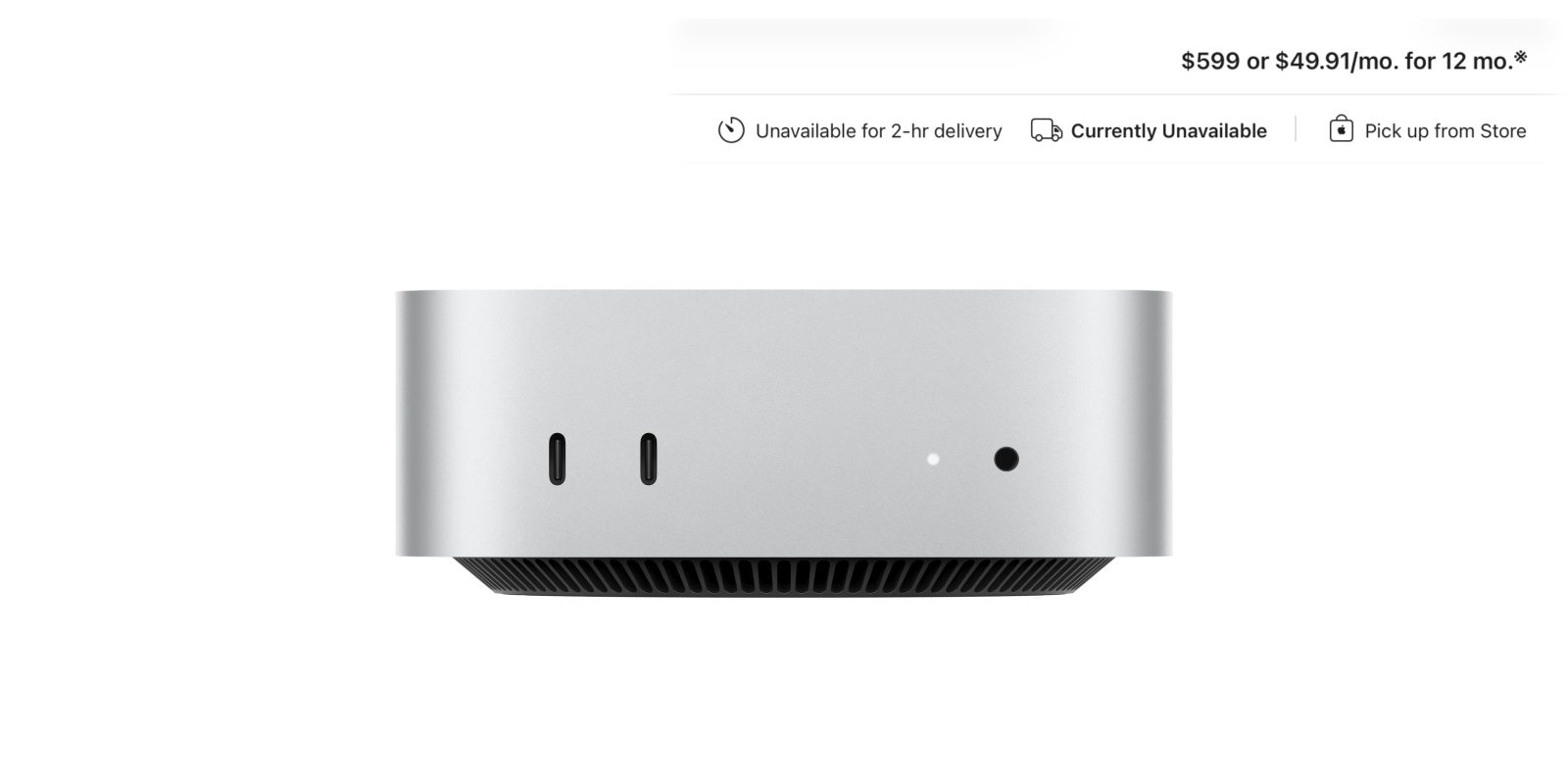
During Apple's quarterly earnings call, CEO Tim Cook shed light on the persistent supply constraints affecting the Mac mini and Mac Studio. Customer interest in agentic AI use cases, such as OpenClaw, has driven demand beyond Apple's forecasts, while industry-wide shortages of advanced nodes and memory components continue to hinder production. As a result, many configurations remain out of stock at Apple's online store, and Cook indicated that these supply issues are expected to persist for several more months. Below, we answer key questions about the situation.
What did Tim Cook reveal about Mac mini and Mac Studio supply during the earnings call?
On Apple's latest quarterly earnings call, CEO Tim Cook directly addressed the ongoing supply shortages affecting the company's pro desktop Macs. He confirmed that many configurations of both the Mac mini and Mac Studio are currently listed as completely out of stock on Apple's online store. Cook emphasized that customer demand, particularly from professionals using these machines for advanced AI workloads, has exceeded Apple's internal projections. While Apple is working to ramp up production, Cook stated that the company expects supply constraints to continue for the foreseeable future, with no immediate relief in sight. The call highlighted that these are not isolated issues but part of broader industry trends impacting high-performance components.
Why are these Macs facing ongoing supply constraints?
The supply constraints for Mac mini and Mac Studio stem from a combination of surging demand and limited production capacity. Apple's CEO noted that customer interest in agentic AI use cases—such as those powered by systems like OpenClaw—has grown rapidly, leading to order volumes that Apple did not anticipate. On the supply side, the industry is grappling with shortages of advanced semiconductor nodes and high-bandwidth memory components, which are critical for the M2 Pro, M2 Max, and M2 Ultra chips used in these desktops. These components are in high demand across multiple sectors, including data centers and automotive, further straining availability. As a result, Apple's supply chain cannot keep pace with the unexpected surge, causing extended lead times and out-of-stock situations.
How is agentic AI driving demand for Mac mini and Mac Studio?
Agentic AI refers to AI systems that can autonomously perform tasks, make decisions, and interact with environments. Tools like OpenClaw are increasingly being used by developers, researchers, and creative professionals who require powerful local compute capabilities for model training, inference, and real-time processing. The Mac mini and Mac Studio, equipped with Apple's unified memory architecture and high-performance GPUs, are well-suited for these workloads. According to Tim Cook, the demand from this segment has grown sharply, as more users seek to run agentic AI models locally for faster iteration and data privacy. This niche but rapidly expanding use case has significantly boosted orders, catching Apple off guard and contributing to the current shortage.

Which configurations are currently out of stock?
Tim Cook confirmed that many configurations of both the Mac mini and Mac Studio are completely out of stock at Apple's online store. While he did not specify exact SKUs, reports indicate that high-end builds—such as those with M2 Ultra chips and large amounts of unified memory—are particularly hard to find. Lower-end configurations may have limited availability, but even these are often backordered with no firm delivery dates. The shortages are widespread across Apple's direct sales channel, though third-party retailers may still have sporadic stock. Customers hoping to purchase a fully specced Mac Studio for professional AI work are likely to face the longest delays, as these variants require the most advanced components that are in shortest supply.
How long does Apple expect the shortages to last?
During the earnings call, Apple CEO Tim Cook stated that the company expects the supply shortages for Mac mini and Mac Studio to continue for several months. This timeline reflects the persistent nature of the industry-wide constraints on advanced semiconductor nodes and memory components. Apple is working with suppliers to secure additional capacity, but given the lead times for chip fabrication and memory production, a quick resolution is unlikely. Cook's comments suggest that customers may face limited availability through the remainder of the current quarter and possibly into the next. Apple advises customers to check availability regularly and consider alternative configurations if their needs are less demanding, though even those may be subject to delays.
What are the industry constraints behind these delays?
The delays are primarily due to industry constraints for advanced nodes and memory components. Advanced semiconductor nodes (e.g., 5nm and 3nm processes) used in Apple's M-series chips are produced at a few key fabs, which are running at near-full capacity due to demand from multiple industries. Additionally, high-bandwidth memory (HBM) and other specialized memory types required for pro-level AI tasks are also in short supply. These components are not only used by Apple but also by manufacturers of AI accelerators, servers, and gaming hardware. The global chip shortage, though easing in some areas, remains acute for premium, high-performance parts. As a result, Apple cannot simply increase production of Mac mini and Mac Studio without long lead times for new wafers and memory modules, worsening the current shortage.