JetStream 3.0 Browser Benchmark Launches With Major WebAssembly Overhaul
Apple, Google, and Mozilla today jointly released JetStream 3.0, a ground-up refresh of the cross-browser benchmark suite that measures JavaScript and WebAssembly performance. The update addresses a critical flaw in its predecessor that allowed top-tier browsers to score an \"infinity\" in certain tests — a sign the old benchmark had become obsolete for modern web workloads.
\"JetStream 2’s WebAssembly subtests had been optimized to the point where startup times effectively hit zero milliseconds,\" said a WebKit engineer involved in the project. \"That made the scoring formula break. We needed a benchmark that reflects real-world usage, not just micro-optimizations.\"
Background
JetStream 2, released in 2019, scored WebAssembly in two phases: startup and runtime. Over the years, browser engines like WebKit’s JavaScriptCore, Chrome’s V8, and Firefox’s SpiderMonkey slashed Wasm instantiation times so aggressively that some smallest workloads registered 0 ms — resulting in an infinite score until a patch capped it at 5000.
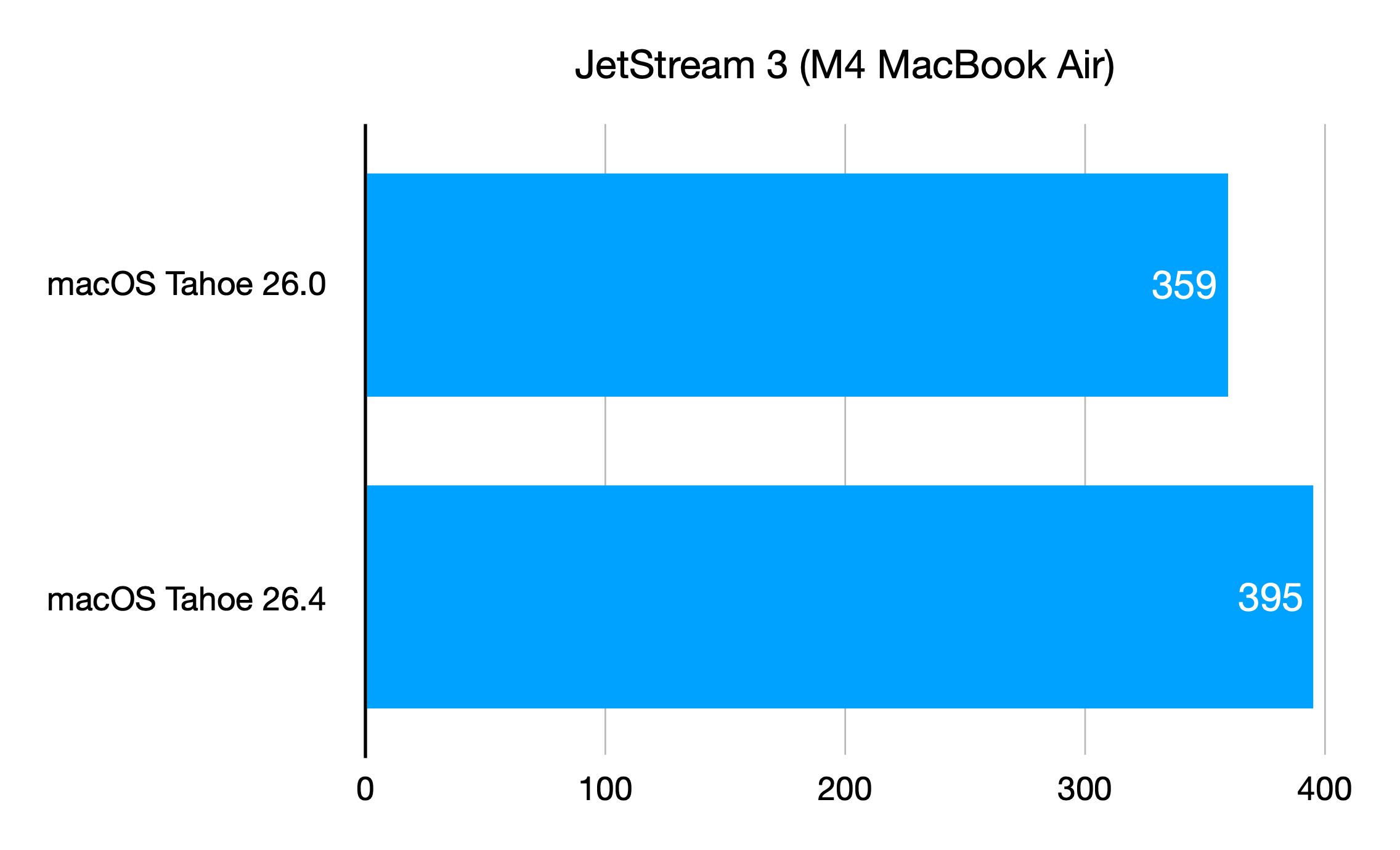
JetStream 3 eliminates this problem by redesigning WebAssembly tests. Instead of separate startup and runtime phases, the new suite uses a unified scoring model that emphasizes mid- and long-running workloads. Benchmark workloads have also been updated to reflect how Wasm is used on the modern web: in image decoders, UI frameworks, and library functions that load on every page.
What This Means
The revision levels the playing field for browser developers. \"We wanted to create a benchmark that rewards general-purpose performance gains, not narrow optimizations that only benefit a single synthetic test,\" said a Google engineer who contributed to the suite. The change will likely intensify competition among browser vendors to optimize real-world Wasm scenarios rather than benchmark-specific edge cases.
For web developers, JetStream 3 provides a more reliable yardstick for comparing browser speeds. Early tests show that modern browsers — including Safari 17, Chrome 120, and Firefox 121 — now score within a narrower range than in JetStream 2, indicating that the new benchmark better captures meaningful performance differences.
Implications for WebAssembly’s Future
The update reflects Wasm’s shift from a niche technology for large C/C++ ports to an everyday component of web infrastructure. As browsers continue to accelerate Wasm, the benchmark’s new methodology ensures that improvements in startup time — which had become negligible — no longer distort overall scores.
\"Getting infinite scores might have felt like a win, but it actually masked real performance bottlenecks,\" the WebKit engineer added. \"JetStream 3 gives us a clear signal on where to focus next.\"
The suite is open-sourced and available for download, with browser vendors already using it to tune their engines ahead of major releases.