Decoding Gödel's Incompleteness Theorems: What They Reveal About Truth and Proof
The Revolutionary Discovery
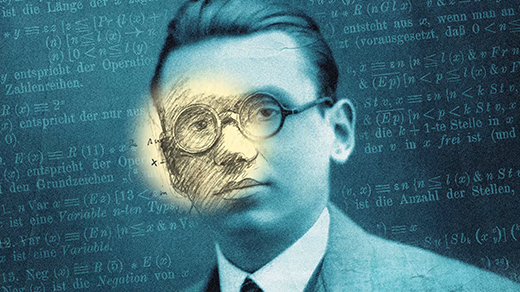
In 1931, the mathematician Kurt Gödel delivered a seismic shock to the foundations of mathematics. By cleverly turning logic inward upon itself, he proved two theorems—the incompleteness theorems—that forever altered our understanding of what can be known and proven. These theorems demonstrated that no formal mathematical system, no matter how carefully constructed from a finite set of axioms and rules, can ever be both complete and consistent. In any sufficiently powerful system, there will always be true statements that cannot be derived from its axioms. This revelation did not just reshape mathematics; it resonated through philosophy, computer science, and our very conception of truth.
Understanding Gödel's First Incompleteness Theorem
Self-Referential Statements
The core of Gödel's first theorem lies in the self-referential construction. Gödel devised a method to encode mathematical statements as numbers—now called Gödel numbers—so that the system could talk about itself. He then constructed a statement that essentially says, "This statement cannot be proved within this system." If the system proves it, then the system is inconsistent (since it proves a falsehood). If the system does not prove it, then the statement is true but unprovable—hence the system is incomplete. This logical mirror trick forced mathematicians to accept that any consistent formal system powerful enough to do arithmetic will inevitably miss some truths.
The Second Incompleteness Theorem
Gödel's second theorem is an even more startling corollary: a consistent system cannot prove its own consistency. That is, if a formal system is consistent, it cannot contain a proof that it is consistent—unless it is actually inconsistent. This struck a blow to the hope that mathematics could provide a sure foundation for itself. For example, the consistency of arithmetic cannot be established within arithmetic itself; one must appeal to a stronger system, whose consistency then becomes questionable. This creates a regress that challenges the very idea of absolute certainty.
Implications for Mathematics and Philosophy
Limits of Formal Systems
The theorems impose fundamental limits on what can be achieved by purely mechanical reasoning. They do not mean mathematics is useless—far from it. Rather, they show that the dream of a single, all-encompassing axiomatic system is impossible. Mathematicians now understand that every system of axioms leaves a twilight zone of truths that are true but unprovable within that system. This has led to fruitful work in proof theory and the study of these independent statements, such as the continuum hypothesis or Goodstein's theorem.
Impact on Artificial Intelligence
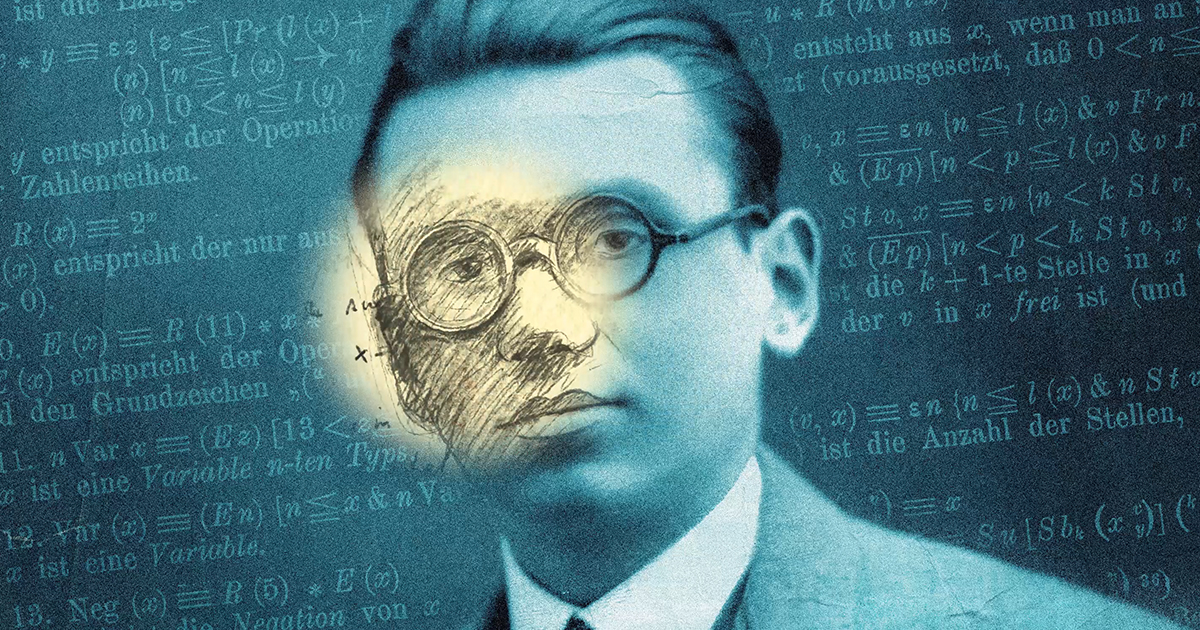
Gödel's theorems also fuel debates in the philosophy of mind and artificial intelligence. Some argue that the inability of a formal system to prove its own consistency shows that human intuition transcends any algorithmic system—a position famously advocated by Roger Penrose. Others counter that the theorems only apply to formal systems, and the brain may not be such a system. Regardless, the incompleteness theorems serve as a reminder that creativity and insight may forever outstrip formal proof.
Common Misconceptions About Gödel's Theorems
- "Gödel proved that everything is uncertain." No—the theorems only apply to formal systems of a certain strength. They do not undermine all knowledge, nor do they mean that truth is relative.
- "Mathematics is broken." Mathematics remains a powerful and coherent discipline. Incompleteness merely sets a boundary; within that boundary, proof is still reliable.
- "Every true statement is unprovable." Only some statements are unprovable in a given system. Many true statements can be proved, and the undecidable ones are often exotic.
- "The theorems were a disaster for logic." On the contrary, they opened new fields like recursion theory and proof theory, enriching our understanding of computation and logic.
The Enduring Legacy of Gödel's Theorems
Nearly a century later, Gödel's incompleteness theorems remain pillars of mathematical logic. They have influenced fields from set theory to computer science, and continue to inspire philosophical reflection on the nature of truth, proof, and reason. The theorems remind us that even in the most rigorous of human endeavors, there is always a horizon beyond which proof cannot reach—a humbling yet exhilarating revelation.