Google's Next Smart Display: 'Google Home Display' Signals a Shift from Nest Branding
Introduction
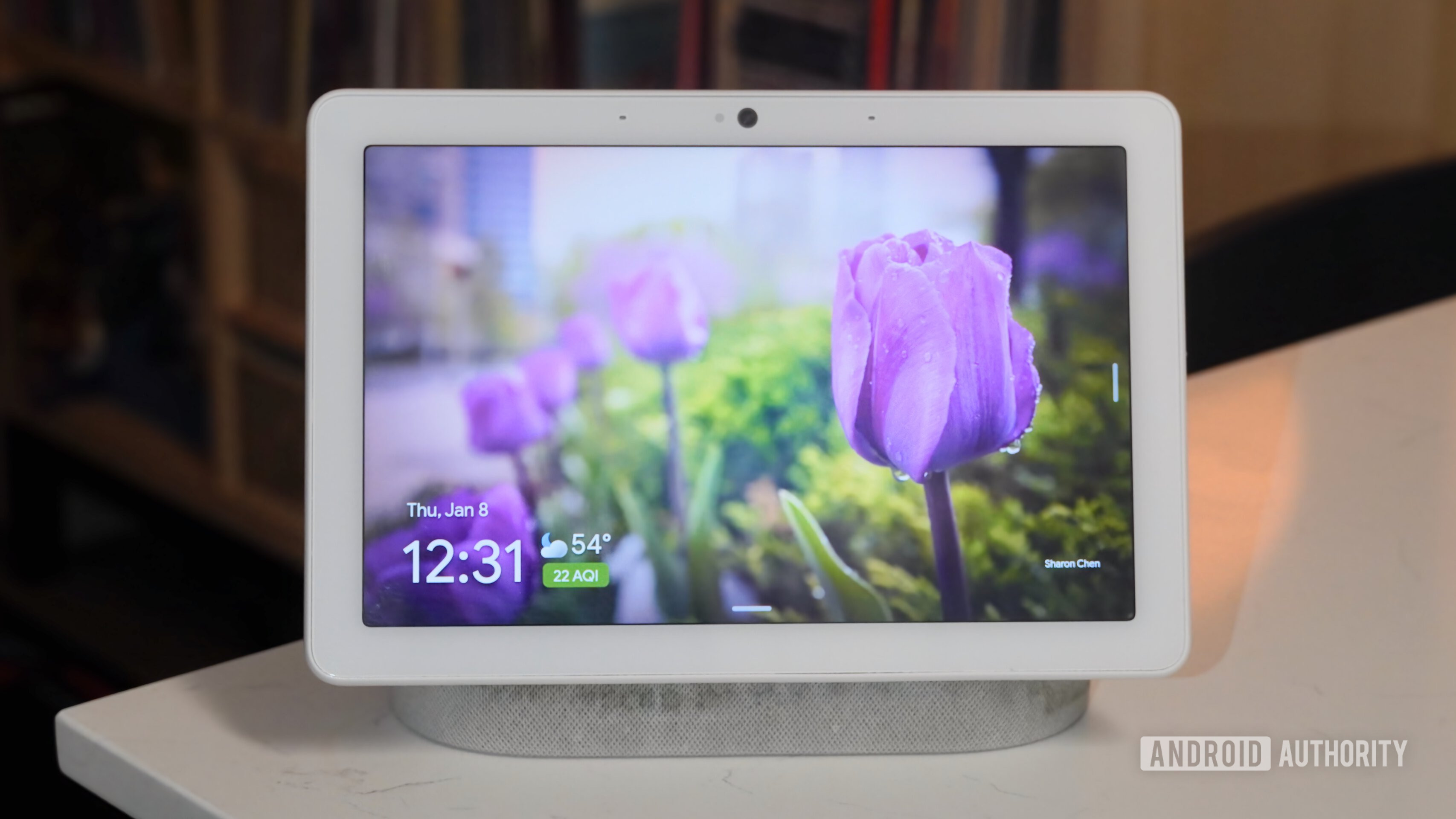
Google's smart display lineup has been in a holding pattern for years, with the Nest Hub and Nest Hub Max remaining largely unchanged since their initial releases. Now, a tantalizing clue has emerged from the depths of the Google Home app for iOS: a reference to a device called the “Google Home Display.” While nothing is official, this could be the first concrete sign that Google is finally working on a true successor to the Nest Hub—and one that adopts a very different naming strategy.
What the Code Reveals
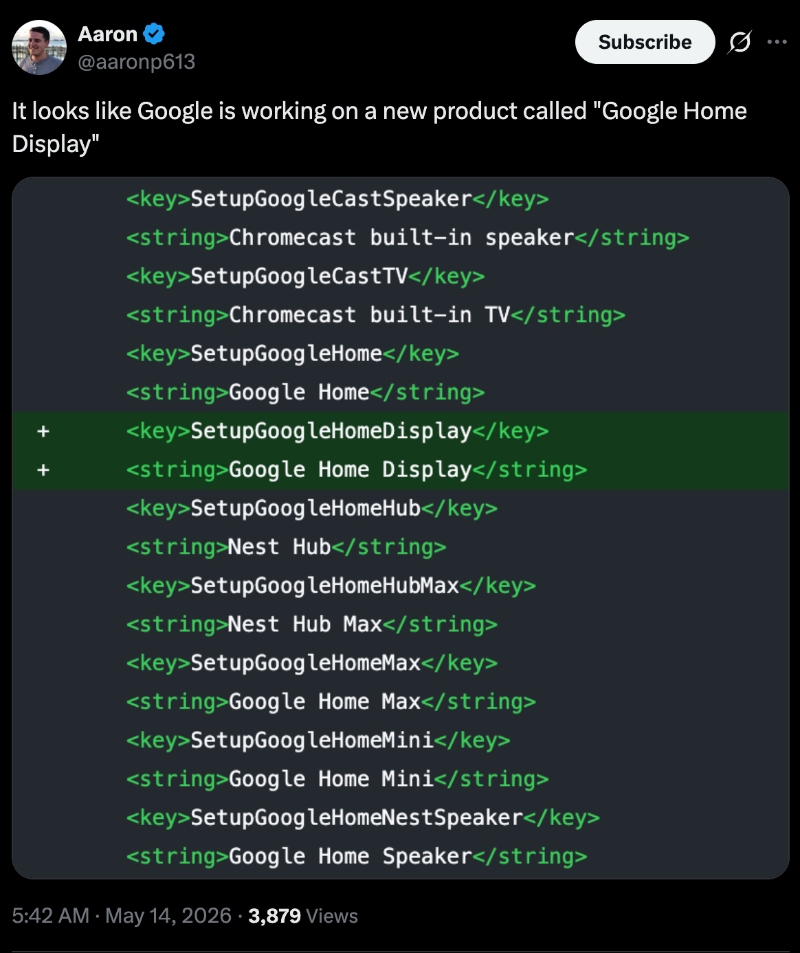
Code sleuths have uncovered strings within the Google Home app that point to a new product category. The exact reference reads “Google Home Display,” suggesting a smart display that sits within the broader Google Home ecosystem rather than the Nest line. This is a notable departure from recent hardware, such as the Nest Audio and Nest Thermostat, which have maintained the Nest branding. The find is preliminary—no images, specs, or release dates have been unearthed—but it aligns with Google’s evolving approach to its smart home portfolio.
To understand the significance, let’s step back. Google has gradually been decoupling its smart home hardware from the Nest name. For instance, the Google Nest Hub (2nd gen) was launched in 2021 under the combined “Google Nest” label, but newer products like the Google Pixel Tablet with its Charging Speaker Dock blurred the line between tablet and smart display. The “Google Home Display” naming could represent a full pivot to the Google Home brand for all future smart displays.
Why the Name Change Matters
Branding isn’t just cosmetic—it reflects strategy. Nest, acquired by Google in 2014, has long been associated with high-end, privacy-focused thermostats and security cameras. Over the years, the Nest name expanded to smart speakers, displays, and doorbells. However, maintaining multiple brand identities in a single ecosystem can confuse consumers. By unifying under Google Home, the company can streamline its message: all your smart home devices work together through the Google Home app and Assistant.
This shift has already begun with the Google Home Hub (later renamed Nest Hub) and the recent Google Nest Hub Max. Now, calling a new product “Google Home Display” would complete the circle, emphasizing the device’s role as a central control panel for your smart home rather than a standalone appliance. It also opens the door for tighter integration with the Google Home app’s upcoming features, like the public preview of script editors and Matter support.
Potential Impact on Existing Products
If Google does release a “Google Home Display,” it could replace or sit alongside the current Nest Hub lineup. The original Nest Hub (2018) and Nest Hub Max (2019) are due for an upgrade. A new model with a faster processor, better camera, or improved screen might finally arrive—minus the Nest name. This would also simplify Google’s product matrix: Nest for thermostats and cameras, Google Home for displays and speakers.
What to Expect from a Nest Hub Successor
Using the clue from the code, we can speculate on features. A true successor would need to address pain points of the current models:
- Better hardware: A faster chip for smoother UI, upgraded speakers for richer audio, and maybe an improved ambient EQ light sensor.
- Smart home control: Deeper integration with Matter and Thread, possibly acting as a border router.
- Camera enhancements: The Nest Hub Max already has a camera; a successor could offer better video call quality and gesture recognition.
- Display size: Options might include a 7-inch model (like the Nest Hub) and a 10-inch model (like the Max), but with higher resolution and thinner bezels.
Google could also borrow ideas from the Pixel Tablet, such as a detachable design that lets you use the display as a standalone tablet—though that would likely require a different naming convention. For now, the “Google Home Display” appears to be a fixed smart display, akin to a larger, smarter photo frame that answers your questions.
Software & Ecosystem Enhancements
Beyond hardware, a successor would shine through software. Google Assistant continues to improve, and the display could leverage new AI features like natural language conversation or proactive suggestions. Integration with Google Photos, YouTube, and Nest cameras would be seamless. Moreover, the device could become the hub for your entire smart home, overtaking the role of the Nest Hub Max as the primary controller.
The Future of Google's Smart Home Ecosystem
This discovery isn’t just about one device—it’s a signal of Google’s direction. The company is investing heavily in the Google Home platform, with features like the public preview of automation scripts and expanded Matter support. A new smart display branded under that umbrella would reinforce the ecosystem’s coherence.
Additionally, moving away from the Nest name on smart displays could simplify marketing. Consumers already associate “Google Home” with a family of connected devices (speakers, displays, routers). Adding a display to that family feels natural. It also positions the product against competitors like Amazon’s Echo Show series (Amazon Echo) and Lenovo’s Smart Display line without the premium stigma (or confusion) of the Nest label.
Of course, we must temper expectations. Code references don’t guarantee a product launch. Google has cancelled hardware before (remember the Bisto headphones?). But the consistency of this clue, combined with the age of the current Nest Hub lineup, makes a launch plausible—perhaps alongside the Google Pixel 9 or at a fall event.
Conclusion
In summary, the Google Home Display hint buried in the Android Authority report is a promising breadcrumb for smart home enthusiasts. It suggests Google is not abandoning the smart display category but refreshing it with a new identity. A true Nest Hub successor—one that echoes the strengths of the original while embracing a unified Google Home brand—could re-energize the market. Whether it arrives this year or next, the evidence is building. Stay tuned to the Google Home app for more clues, and keep an eye on Google’s upcoming hardware events.