Airbnb's Privacy-First Identity Overhaul: How Context-Aware Profiles Protect User Data
In a significant move to enhance user trust and privacy, Airbnb has revamped its identity system to support privacy-first social features within its Experiences platform. The new approach introduces context-specific profiles that decouple global user identity from publicly visible information, preventing unwanted cross-context linkage. This transformation was accomplished through a combination of automated auditing, manual validation, and AI-assisted refactoring. Below, we delve into the key aspects of this redesign through a series of questions and answers.
Jump to: What is the new identity model? | Why was it redesigned? | How does it support privacy? | What are context-specific profiles? | How does it prevent cross-context linkage? | What methods were used for migration?
What is the new identity model implemented by Airbnb?
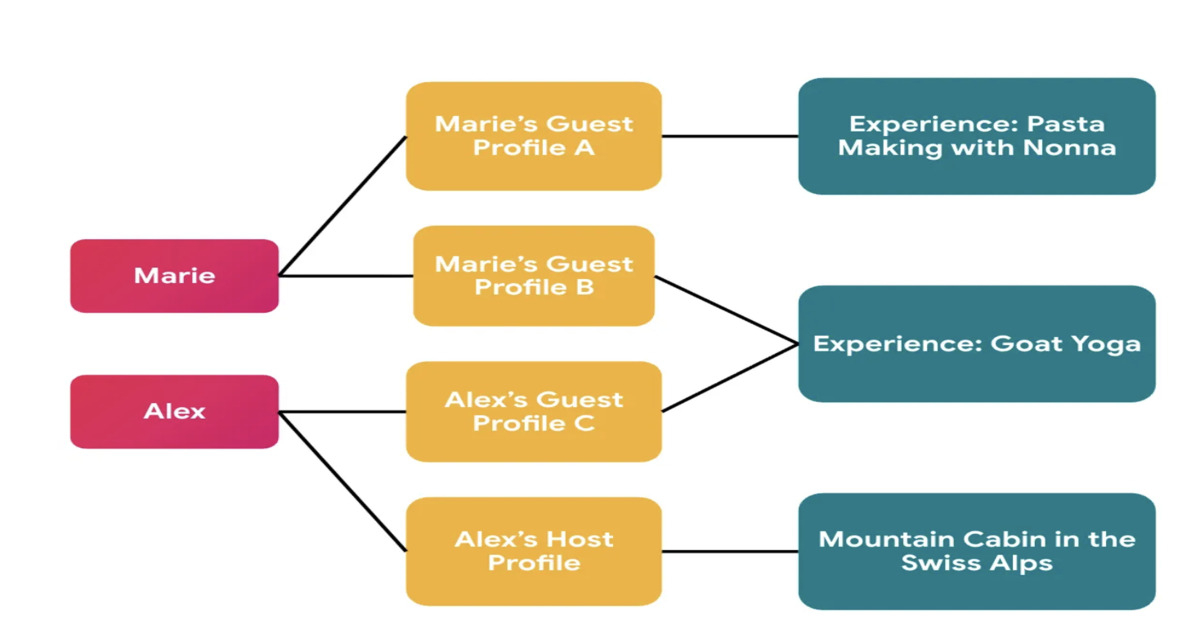
Airbnb has introduced a context-aware identity model that separates a user's global identity from their externally visible profiles. Unlike traditional systems where a single profile is shared across all interactions, this model creates distinct profiles tailored to specific contexts—such as booking an Experience or participating in a group activity. The system still uses a core, persistent identity behind the scenes for authentication and fraud prevention, but it surfaces only relevant, limited information to other users. This approach allows Airbnb to offer social features like reviews, messaging, and group bookings without exposing unnecessary personal data or creating permanent digital footprints that could be tracked across different services.
Why did Airbnb redesign its identity system?
The primary motivation was to enable privacy-first social features within Airbnb Experiences. As the platform expanded into more interactive activities, users expressed concerns about sharing personal details with strangers. The old identity model tied all actions to a single profile, making it difficult to participate socially without revealing too much. By adopting a context-aware approach, Airbnb aims to strike a balance between connection and confidentiality. Users can now engage in experiences—whether cooking classes or guided tours—without worrying that their interactions will be linked back to their full travel history or personal account. This redesign also helps Airbnb comply with evolving data protection regulations globally.
How does the new model support privacy-first social features?
The model supports privacy-first social features by ensuring that each interaction has its own limited, ephemeral profile. For example, when a user joins a group hiking Experience, they see only a profile specific to that activity—containing perhaps their first name, interests relevant to hiking, and a rating for similar experiences. Their full Airbnb history, location, and contact details remain hidden. After the Experience ends, the activity-specific profile can be archived or anonymized. This design prevents the accumulation of a permanent social trail across different Experiences. Additionally, users have control over what information is visible in each context, and they can choose to reveal more details only when necessary. This granularity fosters trust and encourages more people to participate in social features.
What exactly are context-specific profiles?
Context-specific profiles are temporary or segmented identities that Airbnb generates for each distinct interaction or Experience. Think of them as digital masks that a user can wear: one for a wine tasting workshop, another for a guided city tour, and yet another for a personal account overall. These profiles contain only data relevant to that context—such as the user's name, a short bio, and feedback from similar activities. They are not automatically linked to the user's main account information outside of that context. This means a host or co-participant in one Experience cannot look up your profile from a different Experience unless you explicitly allow it. The system manages the mapping between these context profiles and the core identity internally, ensuring consistency for account management while preserving privacy for social interactions.
/presentations/game-vr-flat-screens/en/smallimage/thumbnail-1775637585504.jpg)
How does this prevent cross-context linkage?
Cross-context linkage is prevented by isolating profile data through a combination of technical and policy controls. Technically, each context profile is stored as a separate data object with its own access controls. An AI-based refactoring engine ensures that internal services only query the relevant profile for a given session, rather than pulling from the global identity store. Moreover, Airbnb implemented strict auditing rules: any attempt by an upstream service to combine data from multiple contexts triggers an automated alert and requires manual validation. Additionally, the system uses differential privacy techniques to aggregate insights without identifying individuals. Users themselves cannot manually link context profiles—the platform does not expose a feature to merge or view profiles from different Experiences side by side. This creates a strong barrier against assembling someone's comprehensive behavioral pattern.
What methods were used in the migration to this new model?
The migration was executed through a three-pronged strategy: automated auditing, manual validation, and AI-assisted refactoring. First, automated auditing tools scanned existing codebases and data flows to identify every instance where identity information was passed between services—whether in backend APIs, database queries, or frontend components. Each instance was flagged for potential cross-context leakage. Next, human engineers manually validated these findings, considering business logic and edge cases that automation might miss. Finally, an AI-assisted refactoring engine was deployed to rewrite service interfaces and database schemas to enforce context-aware identity usage. This engine used pattern recognition to suggest code changes that would restrict data access to only the necessary profile for each operation. The entire process was gradual, with canary testing to ensure no disruption to existing users. By leveraging machine learning, Airbnb reduced the manual effort by 40% and shortened the migration timeline significantly.