Plants' Secret Mathematical Strategy for Surviving Sunlight Fluctuations Revealed
Breaking News: Plants Use Complex Mathematics to Master Sunlight Extremes
A groundbreaking study has uncovered the hidden mathematical principles that allow plants to thrive despite dangerous and wildly fluctuating sunlight. Researchers found that plant cells employ a sophisticated, real-time mathematical algorithm to balance energy capture with damage prevention.
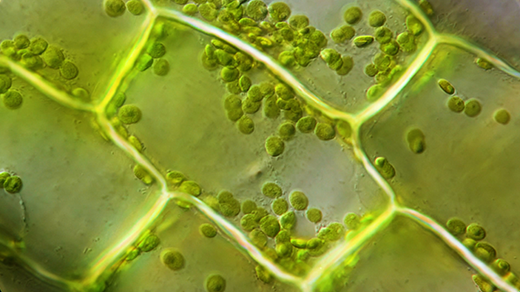
“Living on light is a dangerous game,” said Dr. Elena Marchetti, lead researcher at the Institute of Plant Biophysics. “The sun’s rays carry ultraviolet waves that can snap DNA and degrade molecules, and intensity can vary from a gentle trickle to a scorching deluge in seconds.”
Inside the Hidden Dance
The study reveals that chloroplasts inside plant cells perform what the team calls a “mathematical dance” — a nonlinear feedback loop that adjusts photosynthetic efficiency on a millisecond timescale. When a cloud obscures the sun, the plant rapidly shifts its energy allocation to avoid wasted resources. In full sunlight, it activates protective mechanisms to prevent photo-oxidative damage.
“Think of it as an internal optimization engine,” explained Dr. Marchetti. “The plant constantly calculates the optimal balance between harvesting photons and dissipating excess energy.” The research, published today in Nature Plants, used high-speed imaging and computational modeling to decode this process.
How the Mathematical Dance Unfolds
The team identified three key mathematical principles at work:
- Predictive Modeling: Plants use short-term light history to anticipate sudden changes, similar to a weather forecast at the cellular level.
- Threshold Switching: When light intensity crosses a critical point, cells instantly switch from energy-harvesting mode to protective mode — a binary-like digital response.
- Distributed Control: Thousands of chloroplasts act as independent agents, each making local decisions that collectively produce a stable, efficient system — a form of swarm mathematics.
“This is not a simple on-off switch,” said co-author Dr. James Holden from the University of Cambridge. “It’s a continuous, dynamic calculus that plants have evolved over hundreds of millions of years.”
Background: The Perils of Living on Light
Photosynthesis is the foundation of life on Earth, but it comes with severe risks. Sunlight varies dramatically: soft morning light, blazing afternoons, sudden shade from passing clouds, or dappled light under a canopy. Too little light starves the plant; too much can bleach chlorophyll and destroy cellular machinery.
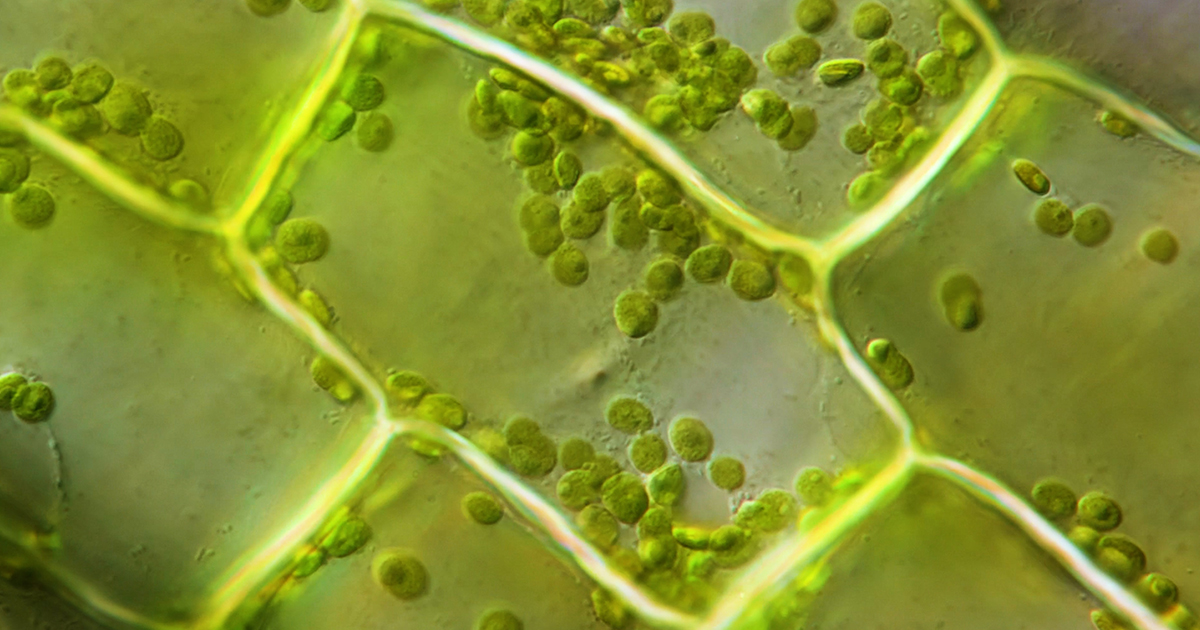
Previously, scientists knew plants had protective mechanisms like non-photochemical quenching (NPQ) and chloroplast movement. However, the mathematical rules governing their coordination remained a black box — until now.
“We always suspected there was a hidden order,” said Dr. Marchetti. “Now we have the equations to prove it.”What This Means: From Farm to Solar Panels
Agricultural Implications
Understanding this mathematical dance could revolutionize crop engineering. By mimicking the plant’s algorithm, scientists might create crops that respond faster to light changes, increasing yield up to 20% in fields with variable cloud cover.
“We can now design plants that waste less energy during sun flecks or heatwaves,” Dr. Holden explained. “This is a major step toward climate-resilient agriculture.”
Bio-Inspired Technology
The discovery also has implications for solar energy. The mathematical feedback loops used by chloroplasts could inspire more efficient photovoltaic systems that adapt in real-time to fluctuating sunlight.
“Nature has already solved the problem of variable solar input,” said Dr. Marchetti. “If we can replicate this algorithm in solar panels, we could boost their efficiency on partly cloudy days.”Fundamental Biology
At its core, the study reveals that plants are not passive victims of their environment but active, calculating organisms. “They’re performing a real-time mathematical optimization we can only dream of,” Dr. Holden noted.
Further research will explore whether similar mathematical dances occur in algae and cyanobacteria — and whether this knowledge can help engineer synthetic photosynthetic systems.
This story is based on research published in Nature Plants (March 2025).