How to Uncover Black Holes Hidden in JWST's Little Red Dots
Introduction
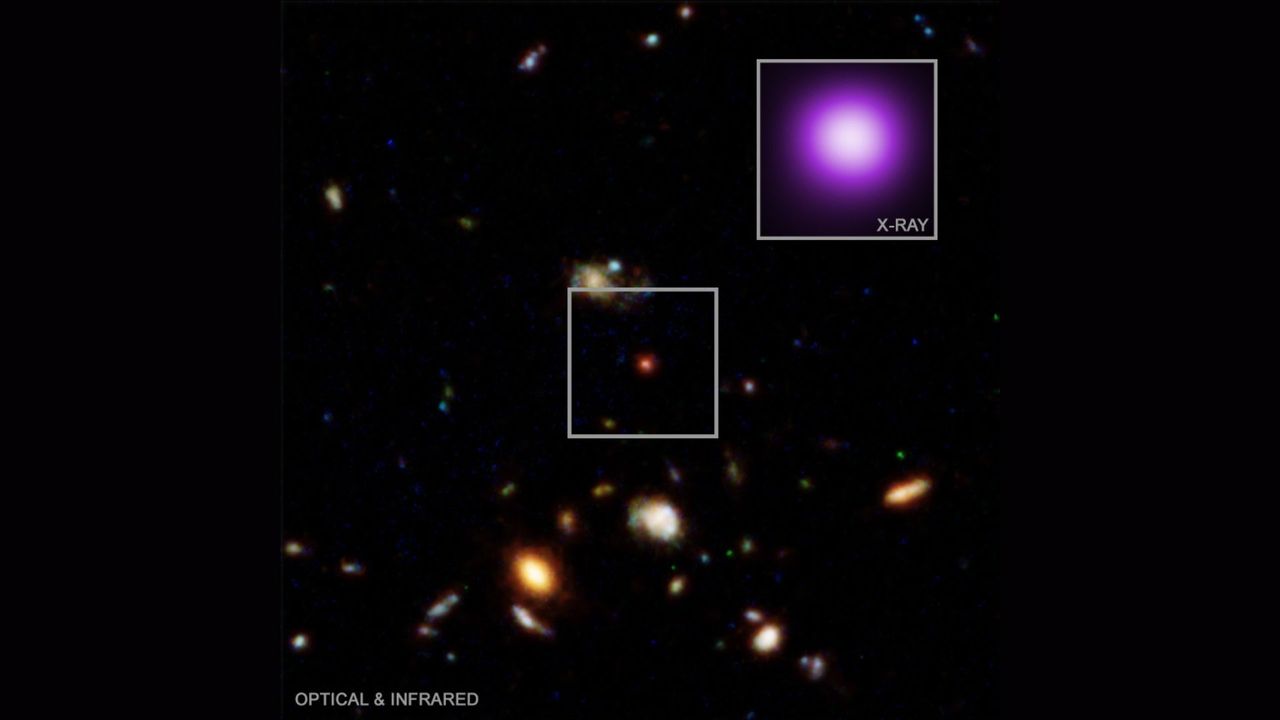
The James Webb Space Telescope (JWST) has unveiled a universe full of enigmatic objects, among which the so-called "little red dots" have puzzled astronomers. These compact, red-hued sources appear in deep-field images, hinting at early galaxies or perhaps something more exotic. Recent observations of a peculiar object—dubbed an "X-ray dot"—suggest that some of these dots may actually be supermassive black holes lurking in the early cosmos. This guide will walk you through the steps astronomers use to identify and study such objects, from spotting the little red dots in JWST data to linking them with X-ray emissions that reveal black hole activity.
What You Need
- JWST NIRCam imaging data (public archives or your own observations) for high-resolution near-infrared views.
- X-ray telescope data (e.g., Chandra or XMM-Newton) to detect high-energy emissions from black hole accretion.
- Astronomical analysis software (e.g., SAOImage DS9, Topcat, or Python with Astropy).
- Multi-wavelength catalogs to cross-match sources across different bands.
- Spectroscopic follow-up data (from JWST NIRSpec or ground-based telescopes) to confirm redshift and black hole signatures.
Step-by-Step Guide
Step 1: Acquire and Examine JWST Deep-Field Images
Start by downloading JWST NIRCam images of well-known deep fields (e.g., SMACS 0723 or the JWST Advanced Deep Extragalactic Survey - JADES). Load the FITS files into your image viewer (e.g., DS9). Adjust the stretch and color scaling to bring out faint, red objects. Look for tiny, compact sources that appear distinctly red in the F277W and F444W filters—these are the classic "little red dots". Note their coordinates and apparent magnitudes.
Step 2: Create a Sample of Little Red Dots
Using color-magnitude cuts, isolate candidates that are red (e.g., F277W - F444W > 0.5) and faint (magnitude > 26 in F444W). Remove obvious foreground stars by checking for diffraction spikes or large size. Use a cataloging tool like Source Extractor or SExtractor to produce a list of sources. Cross-reference with existing public catalogs to avoid duplicates. Aim for a sample of at least 50-100 dots to have statistical power.
Step 3: Obtain X-Ray Observations of the Target Field
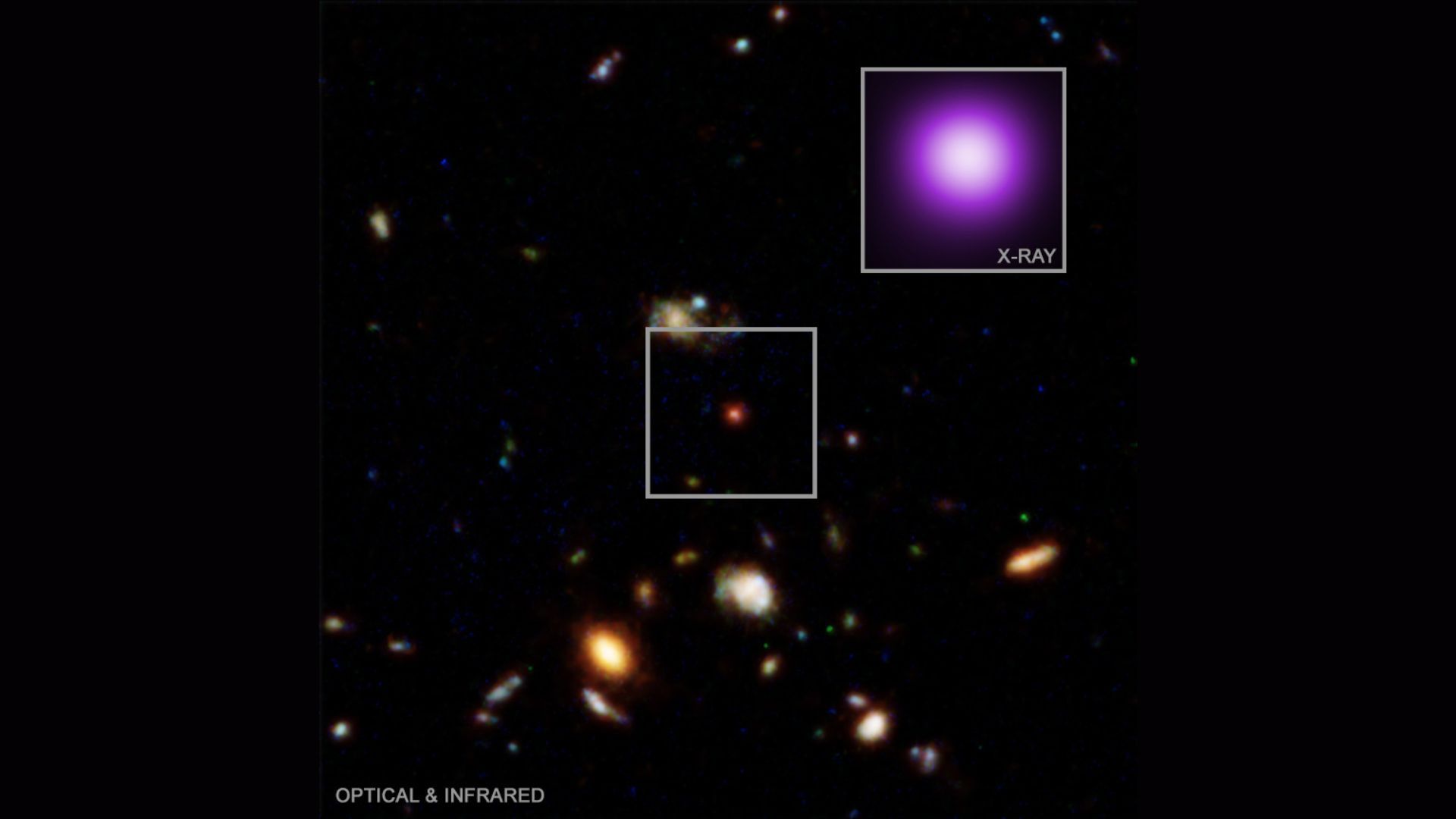
Now, search for archival X-ray data covering the same area. Chandra and XMM-Newton provide deep exposures of many JWST fields. If no data exists, propose new observations (e.g., a 200 ks Chandra pointing). The X-ray images typically have lower resolution but can pinpoint active galactic nuclei (AGN). Look for point sources that coincide spatially with your little red dots. In our featured case, one particular dot showed up as an "X-ray dot"—a faint, unresolved X-ray counterpart.
Step 4: Cross-Match and Verify Counterparts
With coordinates from Step 2, run a cross-match algorithm (e.g., using Topcat with a 2-arcsec radius) against the X-ray source list. Check for matches with low positional uncertainty (<1 arcsec). For suspected black hole candidates, the X-ray emission should be hard (2-7 keV) to distinguish from star-forming galaxies. Verify that the X-ray flux is not due to a passing asteroid or cosmic ray by inspecting individual events. In our example, the X-ray dot aligned perfectly with one of the little red dots, boosting the black hole hypothesis.
Step 5: Analyze Spectroscopic Signatures
To confirm a black hole, you need spectroscopy. Obtain JWST NIRSpec spectra of the little red dot with an X-ray counterpart. Look for broad emission lines (e.g., Hα, Mg II) with widths >1000 km/s—a hallmark of gas orbiting a supermassive black hole. Alternatively, if the object is too faint, use color diagnostics: a steep rest-frame UV slope and strong [OIII] emission also suggest AGN activity. In the case of the X-ray dot, the spectrum revealed a highly redshifted (z~6) broad line, confirming it as an accreting black hole.
Step 6: Interpret the Results and Broader Context
Compile your findings. Did most little red dots have X-ray counterparts? If only a fraction do, that implies two populations: some are compact star-forming galaxies, while others are dust-obscured black holes. The ratio tells us about black hole growth in the early universe. For the X-ray dot we started with, its properties suggest that many little red dots may be actively accreting black holes, not just galaxies. This could rewrite our understanding of how supermassive black holes formed less than a billion years after the Big Bang.
Tips for Success
- Watch for blending: At JWST's resolution, little red dots can be unresolved. Use PSF fitting to separate them from nearby sources.
- Use multiple X-ray observatories: Combine Chandra's sharp resolution with XMM-Newton's sensitivity for robust detections.
- Check for variability: Black hole accretion often varies. Compare X-ray fluxes across epochs if available.
- Don't ignore white dwarfs: Some little red dots could be cool stars in our galaxy; proper motion or parallax from Gaia can weed them out.
- Keep an open mind: The X-ray dot example shows that not every red dot is a black hole—but a surprising number may be. Use your data to test hypotheses, not confirm biases.
By following these steps, you can contribute to solving the mystery of the little red dots and uncover the hidden black holes that might be seeding the early universe.